
Historic Schools
Panoramic view of two historic Japanese school buildings in Hokuto, Yamanashi Prefecture: the Taisho Era School (1924, left) and the Old Tsugane School (1875). Both structures showcase a unique blend of traditional Japanese wooden architecture and Western-style design, reflecting Japan’s transformation during the Meiji and Taisho periods.

Suisha-no-Sato Koen
Springtime at Suisha-no-Sato Koen (Waterwheel Village Park) in Hokuto, Yamanashi Prefecture, Japan, where vibrant pink and white cherry blossoms frame a traditional thatched-roof rest house. In the distance, snow-capped Mt. Kaikoma rises majestically in the Southern Japanese Alps, creating a serene rural landscape that celebrates the charm of historic Japanese architecture and the enduring beauty of cherry blossoms.
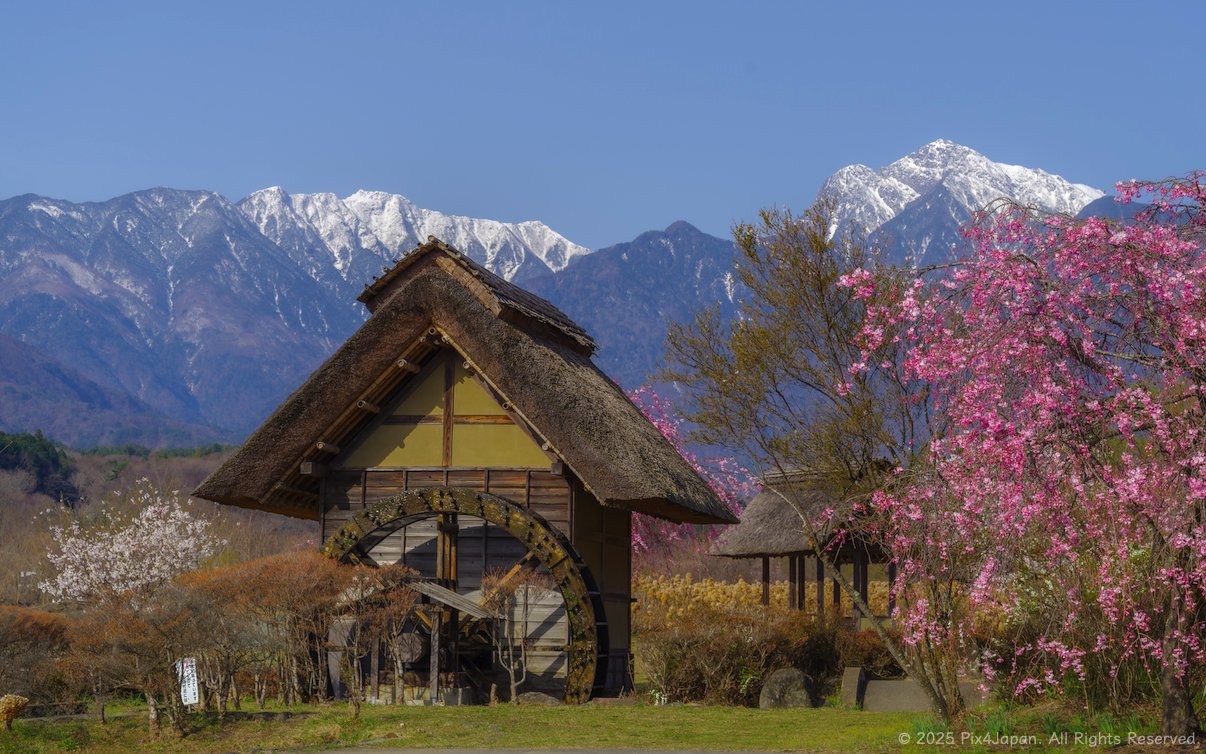
Waterwheel Village Park
Springtime at Suisha-no-Sato Koen (Waterwheel Village Park) in Hokuto, Yamanashi Prefecture, Japan, where vibrant pink and white cherry blossoms frame traditional wooden watermills and thatched-roof rest houses. Set against the scenic backdrop of snow-capped Mt. Kaikoma in the Southern Japanese Alps, this peaceful rural landscape preserves the charm of historic Japanese architecture.

Jisso-ji Temple Belfry
Traditional wooden bell tower at Jisso-ji Temple in the Hokuto region of Yamanashi, Japan. Featuring stout corner pillars and an open design, the bell tower houses a large bronze bell suspended from a central beam. This architectural style dates back to the 13th century. While thatched roofs were once common, tiled roofs now dominate temple structures in Japan.

Yamataka Jindai Zakura
Majestic and timeless, the Yamataka Jindai Zakura stands as one of Japan's Three Great Sakura Trees. Estimated to be between 1,800 and 2,000 years old, it is among the oldest wild cherry trees in the nation—a living testament to resilience and beauty.
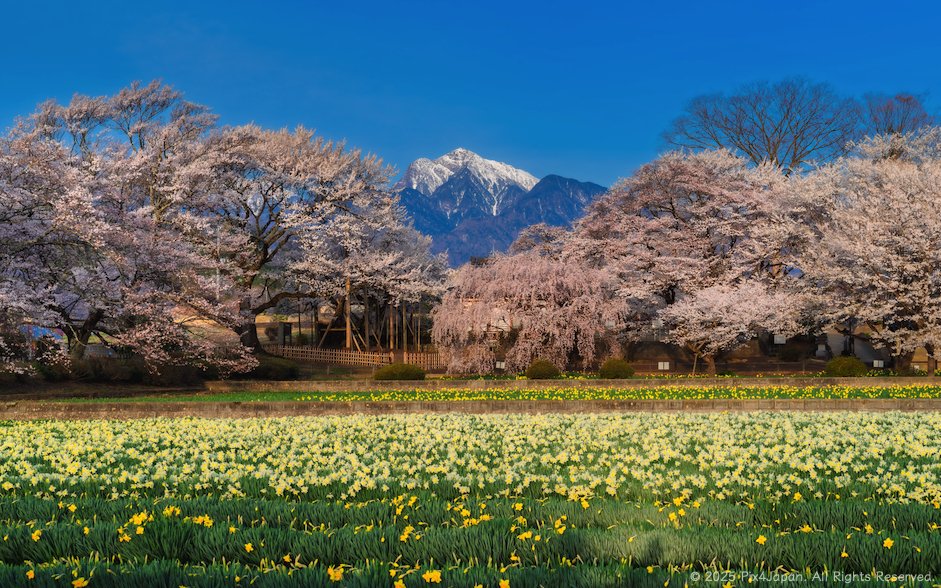
Jisso-ji Temple
Beauty of spring at Otsuyama Jisso Temple in rural Japan featuring ancient cherry blossom trees (sakura), vibrant daffodil fields, and a snow-capped view of Mt. Kaikoma in the distance.

Canopy of the Ancient Ones
Majestic, centuries-old juniper trees with deeply gnarled bark and sprawling twisted limbs stand as spiritual symbols in a tranquil Japanese forest that is part of Ose-jinja Shrine grounds. Surrounded by lush greenery, these revered trees embody natural beauty, cultural heritage, and the serene mystique of rural Japan.
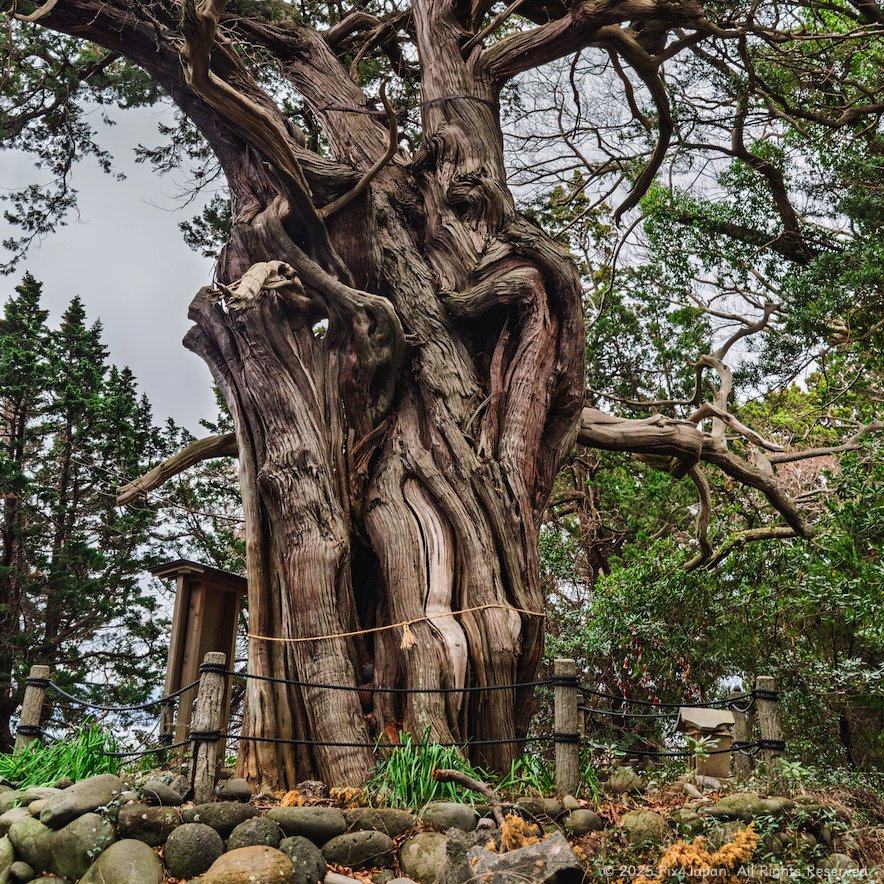
Sacred Junipers
A majestic, centuries-old juniper tree with deeply gnarled bark and sprawling twisted limbs stands as a spiritual symbol in a tranquil Japanese forest. Surrounded by lush greenery and marked with a sacred rope (shimenawa), this revered tree embodies natural beauty, cultural heritage, and the serene mystique of rural Japan.
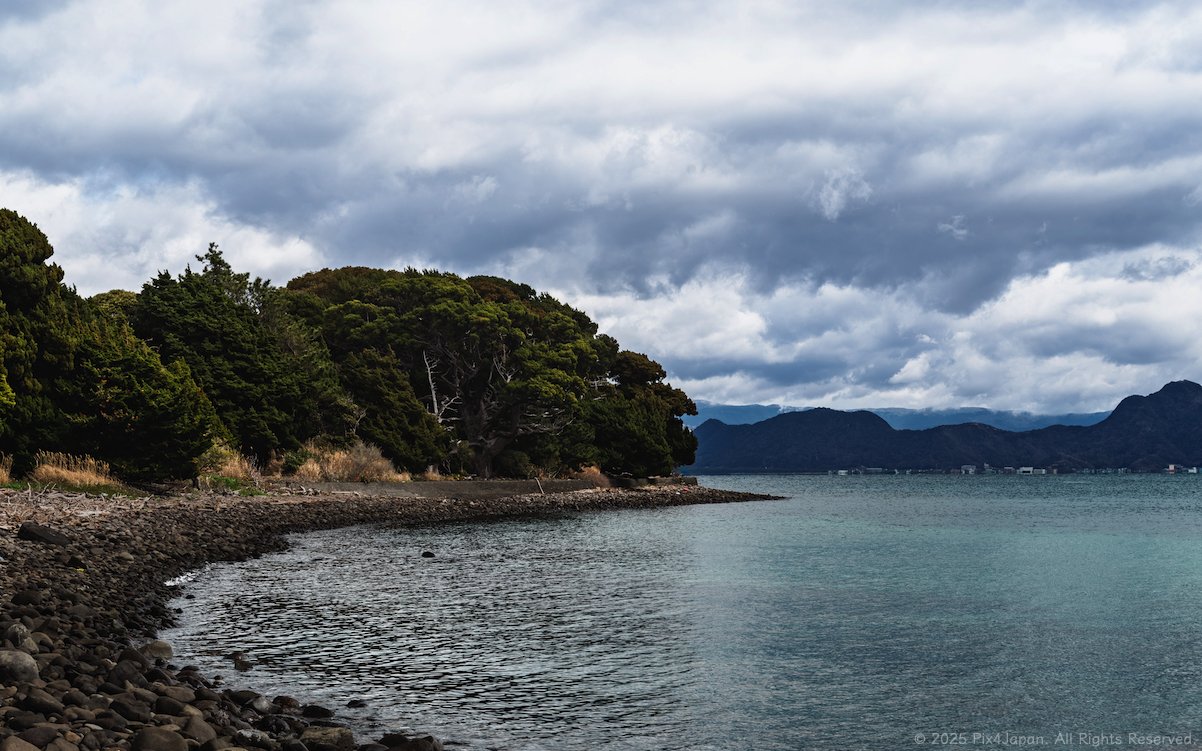
Cape Ose
A serene view of Cape Osezaki’s rocky shoreline, where deep green coastal forests meet the calm, turquoise waters of Suruga Bay. The overcast sky and distant hills add dramatic contrast, highlighting the natural beauty and quiet isolation of this rural Japanese peninsula in Shizuoka Prefecture.

Ose Shrine
Intricate wood carvings of mythological creatures adorn the columns and beams of a Shinto shrine with a long bamboo pole and thick straw rope stretched between the two columns at the front of the shrine located in a remote Japanese fishing village.