Uohama Ameyokoten
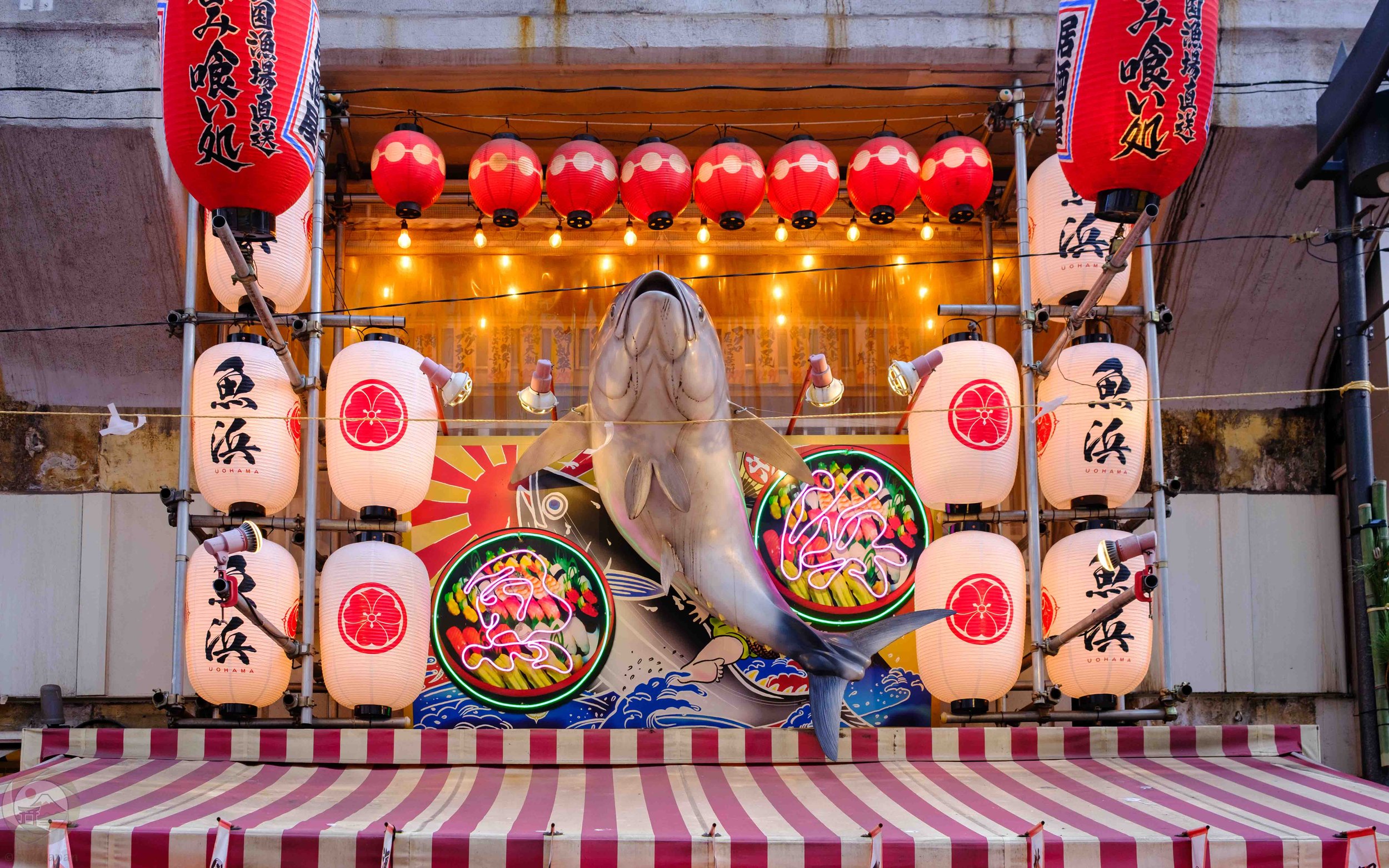
If this scene speaks to you, prints and downloads are available:・Order prints, digital downloads, or commercial licenses・Explore gifts and merchandiseEchoes of the Showa Era in Ameya-Yokocho
上野・アメ横に残る昭和の記憶と賑わい
After visiting Marishiten Tokudai-ji Temple (see previous post), I wandered into Ameya-Yokocho, where the colorful storefront of Uohama Ameyoko-ten immediately caught my attention. This traditional izakaya in Ueno, Tokyo, announces itself with rows of paper lanterns, signaling a classic, old-school atmosphere amid the dense cluster of eateries that define this lively shopping district.
Ameya-Yokocho is home to more than 400 small shops, many tightly packed beneath the elevated train tracks that run between JR Ueno Station and Okachimachi Station. Despite the visual noise and constant flow of people, Uohama Ameyoko-ten stands out. Its oversized tuna replica and glowing chochin lanterns draw the eye upward, almost obscuring the fact that the pub itself is tucked beneath the rumbling tracks above.
While researching the backstory of this izakaya, I learned that it is one of many eateries operated by a larger corporation led by Yoshinobu Hamakura, an unconventional CEO by Japanese standards. Known for his late-Showa-era fashion and flamboyant personal style, Hamakura presents a sharp contrast to the stereotypical image of a conservative, dark-suited Japanese executive.
Hamakura has focused on opening restaurants in former fishmongers’ and grocers’ spaces that were often forced to close as low-cost supermarket chains gained dominance. Rather than discarding what came before, he brings former proprietors into his businesses, valuing their expertise in food quality and their long-standing relationships with fishermen and farmers who supply the ingredients used in each establishment.
A common thread running through Hamakura’s ventures, including the storefront I photographed here, is a desire to revive the optimism and energy of the late Showa era for the generations of Japanese Millennials and Gen Z. These generations have grown up amid decades of stagnant wages and muted expectations, and these spaces aim to counter that mood.
Beyond nostalgic décor and eye-catching façades, Hamakura’s establishments often incorporate elements of traditional festival culture that incorporate music, dance, and communal participation on a local, intimate scale. In doing so, he wants to encourage interaction among patrons, staff, and neighbors, helping pass down lively traditions that might otherwise fade.
Walking through districts like Ameya-Yokocho inevitably stirs personal reflection. Many of my own old neighborhood haunts have shuttered as proprietors retired or passed away without successors. While market forces ensure that change is inevitable, I cherished those small shops not for bargain prices or branding, but for the human connections we fostered.
Casual conversations over coffee beans, the familiarity of a local dry cleaner, or a quick visit to replace a watch battery created everyday moments of warmth and community that I fondly remember. Stores like Uohama Ameyoko-ten feel like they are making a sincere effort to preserve that spirit in a rapidly changing urban landscape.
Location: Ameya-Yokocho, Taito Ward, Tokyo
Timestamp: 2026/01/02・12:58
Fujifilm X100V with 5% diffusion filter
23 mm ISO 160 for 1/125 sec. at ƒ/2.8
Classic Negative film simulation
References:
